Manual.ly Logo

JBL Aquaristic ProAquaTest Lab Handleiding

0,0 · 0 Beoordelingen

PDF handleiding · 65 Pagina's

Nederlands

M: QW-35-FL
pagina

/ 65

Loading...
20bbaef5bdec311f8d8e156c4e1fe9d6e449 page 9
16 17
deciency. Iron and some other trace elements are only sta-
ble in water for a limited time, even if they are bound to so-
called chelators, as is usual in modern fertilisers. In addition
any tap water added is usually iron-free. Therefore, the iron
content needs to be monitored regularly with this test and re-
plenished if necessary. Cncentrations as low as 0.1–0.2 mg/l
are sufcient for good plant growth. In very densely planted
aquariums, values of up to 0.6 mg/l can also be useful. In
marine water, values of up to 0.05 mg/l are recommended.
Procedure:
1. Rinse both test vials several times with the water to be
tested.
2. Use the enclosed syringe to ll each of the test vials with
5 ml of sample water.
3. Add 5 drops of Fe reagent to one of the two test vials and
mix by swirling. Allow to stand for 10 minutes until the
colour has developed completely.
4. Place both test vials in the grey comparator block: Place
the vial with added reagent at the smooth end and the
vial with untreated sample water (blank sample) at the
notched end of the comparator block.
5. Place the comparator block with the two test vials on the
colour chart in such a way that the notch points to the
values and move it on the colour chart until the colour of
the sample mixed with reagents corresponds as closely
as possible to the colour under the blank sample.
6. Read the iron content in the notch of the comparator.
Note:If you decide to use the JBL PRO AQUATEST NH
4
at
the same time, make sure you don’t mix up the measuring
vessels of either set. Traces of the JBL PRO AQUATEST
NH
4
left inside the measuring vessel may result in too high
readings in the iron test.
Correcting deviating values:
Too low: Fertilise with ferrous fertilisers from the JBL ferti-
liser range (e.g. JBL Ferropol).
Too high: Carry out the corresponding partial water change.
JBL PRO AQUATEST K
Features: JBL PRO AQUATEST K is an easy-to-use turbid-
ity test for the routine monitoring of the potassium content in
fresh and marine water.
Why test? Potassium is one of the macroelements which is
very effectively absorbed within a few hours and temporarily
stored by plants in fresh water. Growing plants require more
potassium compared to other elements. As a result, potas-
sium concentrations can drop to a minimum range, causing
plant growth to stagnate, even if the aquarium water is ferti-
lised regularly. Potassium deciency initially leads to chloro-
tic spots on the edges of the leaf, which gradually increase
and then turn into grey-brown necroses. The leaves may
crinkle or curl. In Central European tap water, potassium is
usually a decient element compared to in natural biotopes
and this especially applies to calcium and magnesium con-
centrations. For good plant growth, the potassium content
needs to be at around 10 mg/l, in aquariums with high il-
lumination (e.g. in so-called scapes) up to 30 mg/l can be
useful. Higher potassium values in aquarium water encour-
age the growth of green thread algae. Potassium is present
in seawater in concentrations of about 380–400 mg/l, but is
only consumed in small quantities. Excessively high potas-
sium contents can be dangerous for sensitive animals such
as shrimps. The potassium content of the aquarium water
needs to be measured on a daily basis initially. This enables
the needs of the plants to be determined and the dosage of
the fertiliser can be carried out accordingly. Afterwards, rou-
tine measurements can be carried out after longer intervals.
Procedure:
Freshwater:
1. Rinse the measuring tube (plastic) and the tube (glass)
for the potassium content reading several times with the
water to be tested.
2. Using the syringe supplied, ll 15 ml of sample water into
the measuring tube.
3. Add 10 drops of reagent 1 and mix by swirling.
4. Add 1 large level measuring spoon (broad end of the
enclosed double-ended spoon) of reagent 2 and swivel
slightly for about 30 seconds until the powder has dis-
solved. The water becomes whitish and cloudy. Leave to
stand for 1 minute and then swirl slightly again.
5. Place the glass tube for reading the potassium content
reading on the cross of the colour card.
6. The following procedure should be carried out in bright,
diffuse light. Pour the´ turbid water from the measuring
tube into the reading tube until the turbidity means the
cross on the colour card is no longer visible from above.
7. The potassium content can now be read on the scale of
the tube (bottom of the meniscus).
Marine water:
1. Fill 10 ml sample water with distilled water to 300 ml.
2. Follow the same steps as for fresh water.
3. Multiply the test result by a factor of 30.
Correcting deviating values:
Too low: In freshwater aquariums fertilise with potassium-
containing fertilisers from the JBL ProScape range. We do
not recommend an additional dosage in marine water be-
cause potassium is toxic for various organisms.
Too high: Repeat the measurement after 24 hours. If the
value is still too high, carry out the corresponding partial
water change.
JBL PRO AQUATEST Cu
Features: JBL PRO AQUATEST Cu is an easy-to-use color-
imetric test to routinely determine the copper content in fresh
and marine water aquariums, and in garden ponds. A com-
pensation method developed by JBL allows reliable results
to be obtained even in slightly discoloured water (caused by
peat ltering or disease treatment etc.).
Why test? Copper is a heavy metal which is on the one
hand indispensable as a trace element for plant and animal
organisms. On the other hand it has a devastating effect
as a cell poison (cytotoxin) above a certain concentration.
Copper mainly reaches the aquarium in tap water, as cop-
per pipes were often used for water installation. If the water
remains in such pipes for a longer period of time, consid-
erable amounts of copper can dissolve. The water in the
pipe should therefore be drained before use. For the same
reason, do not use rainwater that has owed over copper
gutters. And make sure the tools you use when setting up
your aquarium or pond are copper-free. A controlled entry
of copper takes place through the application of medications
against parasitic sh diseases, as well as with some algae-
killing agents. The copper concentrations prescribed for this
can be tolerated by sh for a certain time while parasites,
etc., start dying off immediately.
Please note: Copper quickly forms water-insoluble com-
pounds which form deposits on the ground. The JBL PRO
AQUATEST Cu only detects copper dissolved in water.
Procedure:
1. Rinse both test vials several times with the water to be
tested.
2. Use the enclosed syringe to ll each of the test vials with
5 ml of sample water.
3. Add 5 drops of reagent 1 to one of the two test vials and
mix by swirling. Then add 5 drops of reagent 2 and mix
again. Allow to stand for 15 minutes until the full colouring
develops.
4. Place both test vials in the grey comparator block: Place
the vial with added reagent at the smooth end and the
vial with untreated sample water (blank sample) at the
notched end of the comparator block.
5. Place the comparator block with the two test vials on the
colour chart in such a way that the notch points to the
values and move it on the colour chart until the colour of
the sample mixed with reagents corresponds as closely
as possible to the colour under the blank sample.
6. Read the copper content in the notch of the comparator.
Correcting deviating values:
Too low: The value should always remain below the detec-
tion limit (except for some special treatments).
Too high: Regular use of JBL water conditioners, such as
JBL Biotopol or ltering with JBL’s high performance acti-
vated carbon. Water-insoluble copper compounds can only
be eliminated by removing the complete substrate.
JBL PRO AQUATEST O
2
Features: JBL PRO AQUATEST O
2
is an easy-to-use colori-
metric test for the routine monitoring of the oxygen content
in fresh and marine water aquariums, and in tap and garden
pond water, within a range of 1–10 mg/l (ppm).
Why test? All animals living in water need oxygen to
breathe. Even the „invisible helpers“ in aquariums and
ponds, the cleansing bacteria, are dependent on a suf-
cient oxygen content for the conversion of ammonium to
nitrate. The oxygen supply they need can be safeguarded
by adequate planting. In aquariums and ponds with little or
no planting and in marine aquariums, the oxygen content
always needs to be kept at the appropriate saturation value
with the help of technical equipment. The saturation value
depends on the water temperature (see table on last page).
Plants are able to exceed this saturation value through their
assimilation activity. In well planted aquariums and ponds,
for example, values can be found towards the end of the
lighting period, which are 1 to 2 mg/l higher than the satura-
tion value.
Procedure:
1. Rinse the measuring vessel several times with the water
to be tested.
2. Fill the measuring vessel to the brim with the water to be
tested by immersing it in water and place it on a water-
proof surface.
3. Add 6 drops of O
2
reagent 1 and 6 drops of O
2
reagent
2 slowly one after the other, until the measuring vessel
overows.
4. Avoiding bubble formation, close the measuring vessel
bubble-free with the enclosed cap and shake vigorously
for approx. 30 seconds.
5. Remove the cap from the measuring vessel and add 6
drops of O
2
Reagent 3.
6. Close the measuring vessel again (bubbles no longer
matter) and shake vigorously for approx. 30 seconds. Al-
low to stand for 10 minutes until the full colouring devel-
ops.
7. Move the measuring vessel back and forth approx. 3–5
cm above the white part of the colour chart and select the
colour with the best possible match.
8. Read the oxygen content off the relevant colour eld.
Correcting deviating values:
Too low: Put in more plants and/or improve care of exist-
ing plants, e.g. by installing a CO
2
supply unit (JBL ProFlora
CO
2
kit). Improve ventilation, e.g. with a JBL ProSilent air
pump and/or improve water movement on the surface with
ow pumps, protein skimmers (marine water) or in garden
ponds with stronger pumps (pond lters) in conjunction with
a waterfall or watercourse.
Too high: Not applicable.
JBL PRO AQUATEST CO
2
Direct
Features: JBL PRO AQUATEST Ca is an easy-to-use titra-
tion test to determine the carbon dioxide content of fresh-
water.
Why test? Carbon dioxide (CO
2
) is the most important plant
nutrient. The consumption of CO
2
differs from aquarium to
aquarium and depends, amongst other things, on the fol-
lowing factors: number and demands of plants, carbonate
hardness, water movement and light. Fertilisation with CO
2
is usually done with a CO
2
fertiliser system. In the aquarium
water, a CO
2
content between 15 and 30 mg / l is recom-
mended. This range is safe for sh and at the same time en-
sures luxuriant plant growth. 20–25 mg/l CO
2
has proven to
be ideal. In special aquariums with a large number of plants,
so-called scapes, higher values of up to 35 mg/l may be re-
quired. With this test you can determine the CO
2
content of
your aquarium water in mg/l and thus monitor the setting of
your CO
2
fertiliser system.
Please note: When fertilising with so-called liquid carbon,
fertiliser monitoring with JBL PRO AQUATEST CO
2
Direct is
not possible because these fertilisers do not contain CO
2
but
other carbon compounds.
Procedure:
1. Rinse the measuring vessel and syringe several times
with the water to be tested.
2. Using the syringe, insert 20 ml of bubble-free sample
water into the measuring tubes.
3. Place the measuring tube on both elds of the enclosed
colour chart.
4. Pour 5 drops of reagent 1 into the measuring tube on the
white eld and swirl it until it is mixed.
5. Add reagent 2 drop by drop. After each drop, swirl and
count the drops until a pink colour is obtained which re-
mains stable for 60 seconds and corresponds to the col-
our in the second measuring tube on the pink colour eld.
To compare the colours, look into the tubes from above.
6. The number of drops multiplied by 2 gives the carbon di-
oxide content in mg/l. Example: 10 drops of reagent 2 =
20 mg/l CO
2
.
Since other acids in the water impair the measurement, a
blank value must also be determined. To do this, take a wa-
ter sample of 100 ml and aerate it for 15 min using a JBL
ProSilent air pump with an air stone. Then determine the
blank value according to the instructions given above.
Result–blank value = actual carbon dioxide concentration
in mg/l.
Correcting deviating CO
2
values:
Too low: Add carbon dioxide to the aquarium using a JBL
ProFlora CO
2
fertiliser system.
Too high: Aerate the aquarium using a JBL ProSilent air
pump.
CO
2
table
Special feature: The CO
2
table enables you to determine
the carbon dioxide content through the carbonate hardness
(KH) and the pH value of the water. This method should only
be used if no pH-lowering substances, such as nitrate or
peat, are in the water.
Why test?
Carbon dioxide (CO
2
) is the most important plant nutrient.
The consumption of CO
2
differs from aquarium to aquarium
and depends, amongst other things, on the following factors:
number and demands of plants, carbonate hardness, water
movement and light. Fertilisation with CO
2
is usually done
en
en
en
en
en

Chat met je JBL Aquaristic ProAquaTest Lab-handleiding via AI

Krijg direct AI-antwoorden uit je JBL Aquaristic ProAquaTest Lab-handleiding

Vraag alles over JBL Aquaristic ProAquaTest Lab. Antwoorden komen uit deze handleiding, met de pagina's waarop ze zijn gebaseerd.

ProAquaTest Lab Onderhoudsschema

Dagelijks
Meet magnesiumgehalte in zoetwateraquarium

Meet aanvankelijk dagelijks om de behoeften van de planten en de meststofdosering te bepalen. Schakel daarna over op langere intervallen.

Dagelijks
Meet kaliumgehalte in zoetwateraquarium

Meet aanvankelijk dagelijks om de behoeften van de planten en de meststofdosering te bepalen. Schakel daarna over op langere intervallen.

M: qwen/qwen3.8-flash

Stel eenVraag

0/1000

Beveel je ProAquaTest Lab aan?

Ja Nee

Veelgestelde Vragen

A

Garandeer nauwkeurige resultaten door alle vaten meerdere malen te spoelen met steekwater voordat u test. Houd druppelaars verticaal om luchtbelletjes te vermijden. Volg de specifieke wachttijden voor kleurontwikkeling. Vergelijk kleuren tegen de grafiek op een witte achtergrond. Gebruik de aangeleverde spuiten en comparator blok voor consistente volumes.

Is dit antwoord nuttig?

A

Schommelingen in pH kunnen aquatische organismen schaden. Plotselinge veranderingen zijn bijzonder stressvol. Gekleurd water kan bijdragen aan aflezingen maar compensatiehulpmiddelen helpen. Meet altijd op hetzelfde tijdstip van de dag omdat licht CO2-niveaus en pH beïnvloedt. Vermijd direct na het toevoegen van chemicaliën of voedsel testen.

Is dit antwoord nuttig?

A

Controleer kritieke parameters zoals pH en ammoniak regelmatig vooral in nieuwe opstellingen. Test voedingsstoffen zoals nitraat en fosfaat maandelijks zodra het systeem stabiel is. Controleer GH en KH wekelijks om hardheidstrends te monitoren. Test zuurstofniveaus als vissen tekenen van stress tonen of in zwaar gestookte tanks. Frequentie hangt af van de stockdichtheid en tankgrootte.

Is dit antwoord nuttig?

A

Ja de handleiding behandelt verswater aquariums, mariene aquariums en vijvers. Specifieke tests bestaan voor Koi-ketens met hoge stockdichtheid. General hardheid en pH-tests gelden voor de meeste verswateromgevingen. CO2-tests zijn specifiek voor beplante aquariums met actieve plantengroei cycli.

Is dit antwoord nuttig?

A

Corrigeer lage carbonaat hardheid door toevoegen van JBL waterconditioners methydrogen carbonaten. U kunt ook minerale zoutmixen gebruiken die ontworpen zijn voor aquariums. Vermijd het verzachten van water als het al te laag is. Monitor nauw na aanpassing om pH-schommelingen te voorkomen. Her-test na 24 uur om stabiliteit te bevestigen.

Is dit antwoord nuttig?

A

Hoge ammoniak wijst op een biologisch filterprobleem. Voer een grote watervalpartieel waterwisseling direct uit. Voeg nuttige bacteriën toe om de stikstofcyclus te herstellen. Controleer of medicijnen onlangs de nuttige bacteriën hebben geschaad. Zorg dat voeding wordt verminderd totdat niveaus terugkeren naar veilige limieten. Monitor pH omdat dit ammoniak toxiciteitniveaus beïnvloedt.

Is dit antwoord nuttig?

A

Bewaar reagentia droog bij kamertemperatuur in hun oorspronkelijke verpakking. Bewaart ze weg van direct zonlicht en hittebronnen. Zorg dat druppelaars droog zijn aan de buitenkant voordat terugkeer naar bottles. Meng geen doppen tussen verschillende test kits mee. Controleer vervaldatums regelmatig omdat oude reagentia onnauwkeurige resultaten kunnen geven.

Is dit antwoord nuttig?

M: QW-35-FL

Voordelen en Nadelen

Voordelen

  • Uitgebreid assortiment tests dat alle belangrijke parameters beslaat voor diverse aquatische opstellingen inclusief verswater marien en vijvers
  • Geavanceerde compensatietechnologie zorgt voor betrouwbare resultaten zelfs in water verkleurd door veefiltering of behandelingen
  • Gedetailleerde procedures minimaliseren gebruikersfouten en bevatten visuele hulpmiddelen zoals kleurkaarten voor gemakkelijke interpretatie van metingen
  • Reagentia zijn stabiel en effectief wanneer correct opgeslagen waardoor langdurige consistente monitoring van waterchemie mogelijk is
  • Specifieke tools beschikbaar vereenvoudigen het testproces toegankelijk maken voor beginners terwijl nauwkeurigheid behouden voor experts
VS

Nadelen

  • Sommige tests vereisen kleuraflezingen binnen 15 minuten om nauwkeurigheid te garanderen voordat de oplossing kleur verandert
  • Gebruikers moeten erop toezien dat testvaten niet worden gemengd tussen verschillende test kits om kruiscontaminatie van monsters te vermijden
  • Nauwkeurigheid hangt af van zorgvuldig druppel tellen en het verticaal houden van druppelaars wat aandacht voor detail vereist
  • Correctie van hoge toxiciteitniveaus vereist vaak onmiddellijke grote volume waterwisselingen die verstorend kunnen zijn
  • Reagentia kunnen verouderen over tijd als niet opgeslagen in oorspronkelijke verpakking weg van hitte en vochtbronnen
M: QW-35-FL

Product Specificatie

Bereik

Waterwaarden

Type

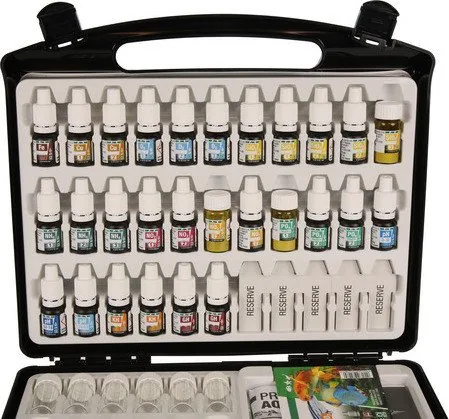
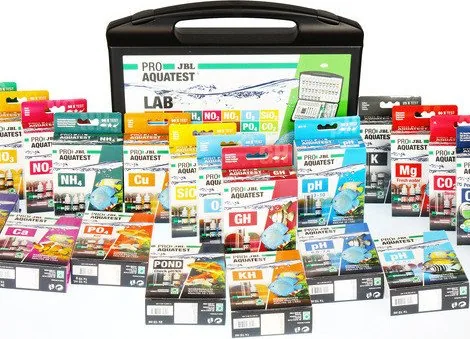
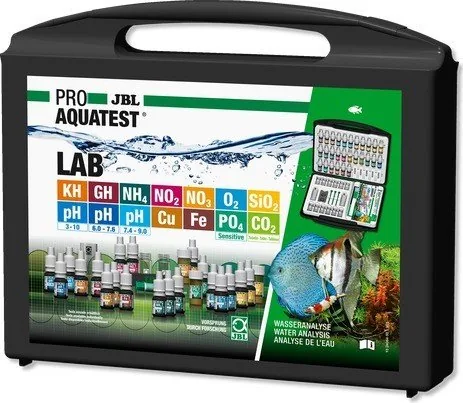
Watertest (pH (3 bereiken), Koolzure hardheid, Totale hardheid, Fosfaat, Nitriet, Nitraat, IJzer, Koper, Silicaat, Zuurstof, Ammonium, Ammoniak, CO2 Indirect), Testkit

Afmetingen

38,20x8,51x31,80cm (BxHxD)

Gewicht

1,27 kg

M: QW-35-FL

Product Beschrijving

Aquarium-waterchemie onder de knie krijgen

Het onderhouden van een gezonde aquatische omgeving vereist nauwkeurige monitoring van waterchemie om het welzijn van alle organismen die erin leven te waarborgen. De JBL Pro AquaTest Lab Testset Handleiding biedt essentiële begeleiding voor hobbyisten die excellentie verlangen in hun aquatische opstellingen om topconditie te handhaven. Deze uitgebreide collectie zorgt ervoor dat uw vissen en planten gedijen onder optimale omstandigheden door gedetailleerde instructies te bieden voor diverse analysemethoden die vandaag de dag gebruikt worden.

Essentiële testmethoden voor helderheid

Waterkwaliteit bepaalt het succes van elke aquariumpakking ongeacht de specifieke soorten die u houdt. Of u nu verswater, marien leven of vijver Koi houdt, verschillende parameters hebben specifieke aandacht nodig voor stabiliteit. De handleiding details geavanceerde titratie- en colorimetrische methoden ontworpen voor nauwkeurigheid en gebruiksgemak voor iedereen. Titratietests zoals KH en GH gebruiken precieze druppelantellingen om hardheidsniveaus effectief over tijd te bepalen. Colorimetrische tests zoals pH en essentiële voedingsstoffen maken gebruik van kleurkaarten voor duidelijke en leesbare resultaten voor snelle check. Elke test bevat stap-voor-stap procedures om gebruikersfouten tijdens het proces van het watermonster testen te minimaliseren. Het systeem compenseert effectief voor waterverkleuring veroorzaakt door veefiltering of behandeling waardoor betrouwbaarheid zelfs in uitdagende condities.

Belangrijke parameters voor gezondheid

Het begrijpen van uw waterprofiel is cruciaal voor het voorkomen van gevaarlijke schommelingen die gevoelige schepsels schaden. Verhardingstests zoals Pro AQUATEST GH en KH voorkomen gevaarlijke pH-schommelingen die gevoelige schepsels significant schaden. pH-niveaus tussen specifieke bereiken passen verschillende soorten van zuur verswater tot alkalisch marien tanks perfect. Voedingstesten monitoren complexe stikstofcycli zoals Ammoniak, Nitriet en Nitraat om systeemfunctie accuraat te volgen. Fosfaat en Silicaat niveaus helpen stijve algenbloei voorkomen die uw tank kan verstikken en vissen doden. Sporenelementen zoals IJzer en Koper zijn vitaal voor groei maar moeten strikt gecontroleerd worden om toxiciteitsrisico's te vermijden. Zuurstofniveaus zorgen voor levensondersteuning voor vissen en bacteriën terwijl CO2-bemesting weelderige plantengroei ondersteunt in beplante tanks.

Onderhoud en Correcties voor Stabiliteit

Het stabiliseren van parameters vermijd stress en ziekteuitbraak in uw ecosysteem op de lange termijn. Als waarden afwijken van aanbevolen bereiken biedt de gids specifieke correctiestappen voor aanpassing om problemen op te lossen. Te lage hardheid vereist het toevoegen van minerale zouten terwijl overschot het gebruik van omgekeerde osmose filtratie suggereert om het te reduceren. Voedingstekorten vereisen specifieke meststoffen uit het ProScape assortiment dat online gemakkelijk beschikbaar is. Hoge toxiciteitsniveaus vereisen onmiddellijke waterwisselingen of introductie van biologische filters om snel balans te herstellen. Opslaginstructies zorgen ervoor dat reagentia effectief blijven voor toekomstige testperioden voordat ze verlopen. Druppelaars moeten verticaal worden gehouden om luchtbelletjes te voorkomen bij het dispenseren van reagentia. Regelmatige monitoring voorkomt onverwachte verrassingen in uw onderhoudsroutine voor uw tanks. Door de JBL Pro AquaTest Lab Testset Handleiding richtlijnen te volgen kunnen aquariumhouders waterhelderheid en stabiliteit bereiken voor hun huisdieren.

M: QW-35-FL

© Copyright 2026 Manual.ly